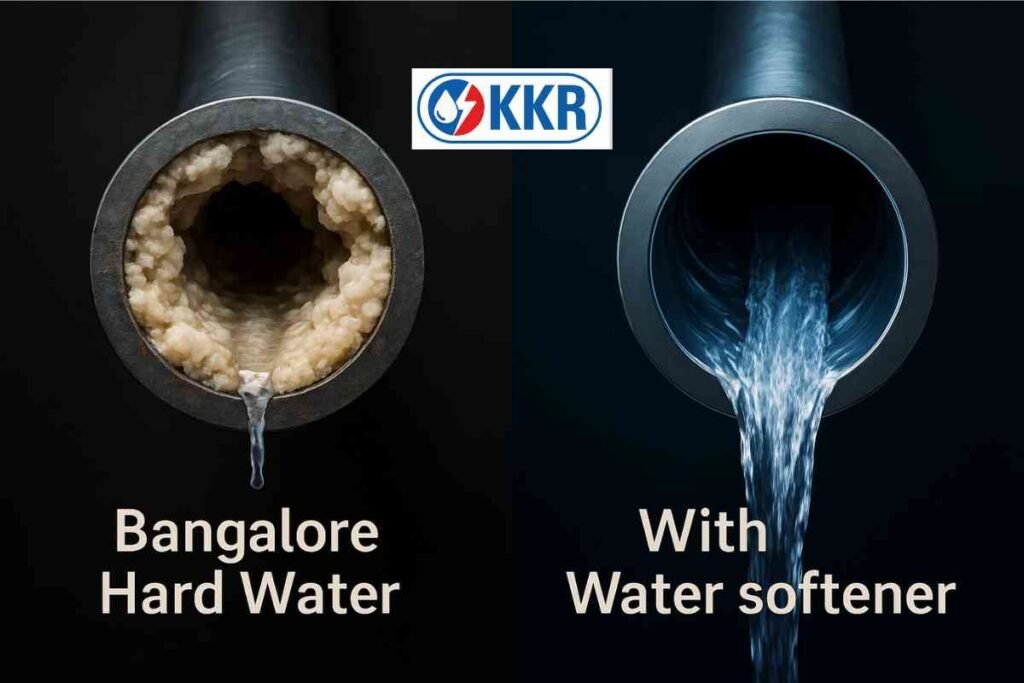
If you’ve ever looked at a freshly washed glass in your Bangalore home and wondered why it still looks cloudy, or felt your skin and hair feel strangely dry even after a shower, you’re not imagining things. You’re experiencing the daily, silent attack of Bangalore’s infamous hard water.
This guide will pull back the curtain on this hidden menace, revealing how it’s secretly costing you money by destroying your appliances, and how a simple, effective device called a water softener is the ultimate fix for protecting your home and your comfort.
“What is This ‘Hard Water’ Business, Anyway?”
Before we declare war, let’s get to know the enemy. In simple terms, “hard water” is just water with a high concentration of dissolved minerals, mainly calcium (Ca) and magnesium (Mg). Think of it as water carrying around invisible, microscopic bits of rock.
Where does it come from? While the Cauvery water supplied by BWSSB is relatively softer, a huge portion of Bangalore, especially new developments from Sarjapur to Hebbal, relies heavily on borewell water. This groundwater spends years seeping through layers of rock and soil, picking up these minerals along the way. So, when it comes out of your tap, it’s delivering more than just H₂O.
You can’t see these minerals, but you can definitely see the trail of destruction they leave behind. It’s the chalky white residue on your taps, the stubborn film on your shower doors, and, most worryingly, the scale building up inside your expensive appliances.
The Silent Destroyer: How Hard Water Wreaks Havoc in Your Home
Hard water is like a quiet, persistent thief. It doesn’t break down your door; it just slowly clogs up the arteries of your home’s plumbing and appliances until they eventually give up.
1. Your Appliances are Under Attack.
This is the most expensive problem. When hard water is heated—in your geyser, washing machine, or dishwasher—the calcium and magnesium minerals precipitate out and form a hard, crusty deposit called limescale.
- Geysers: The heating element inside your geyser gets coated with a thick layer of limescale. This acts like an insulator, forcing the element to work much harder and consume more electricity just to heat the water. It’s the number one reason for skyrocketing electricity bills and the premature death of geysers in Bangalore.
- Washing Machines & Dishwashers: Limescale clogs up the pipes, spray jets, and drums of these appliances. This reduces their cleaning efficiency and eventually leads to costly breakdowns.
2. Your Plumbing and Fixtures Look Terrible.
Those ugly, white, chalky stains on your taps, showerheads, and tiles? That’s limescale. No amount of scrubbing seems to permanently remove it. Over time, it can clog your showerhead’s tiny holes, turning your powerful shower into a sad, uneven sprinkle.
3. Your Skin and Hair are Paying the Price.
Have you ever felt like soap doesn’t lather properly? That’s hard water. The minerals react with soap to form a sticky scum that doesn’t rinse away easily. This residue clogs your pores, leaving your skin feeling dry, itchy, and irritated. It also coats your hair, making it feel rough, dull, and brittle, no matter what expensive shampoo you use.
4. Your Laundry Feels Like Cardboard.
The same soap scum that affects your skin gets trapped in the fibres of your clothes. This is why your freshly washed towels can feel stiff and scratchy, and your coloured clothes look faded over time. You end up using more detergent to get a decent wash, which costs you more money.
The Fix: Introducing the Water Softener, Your Home’s Guardian Angel
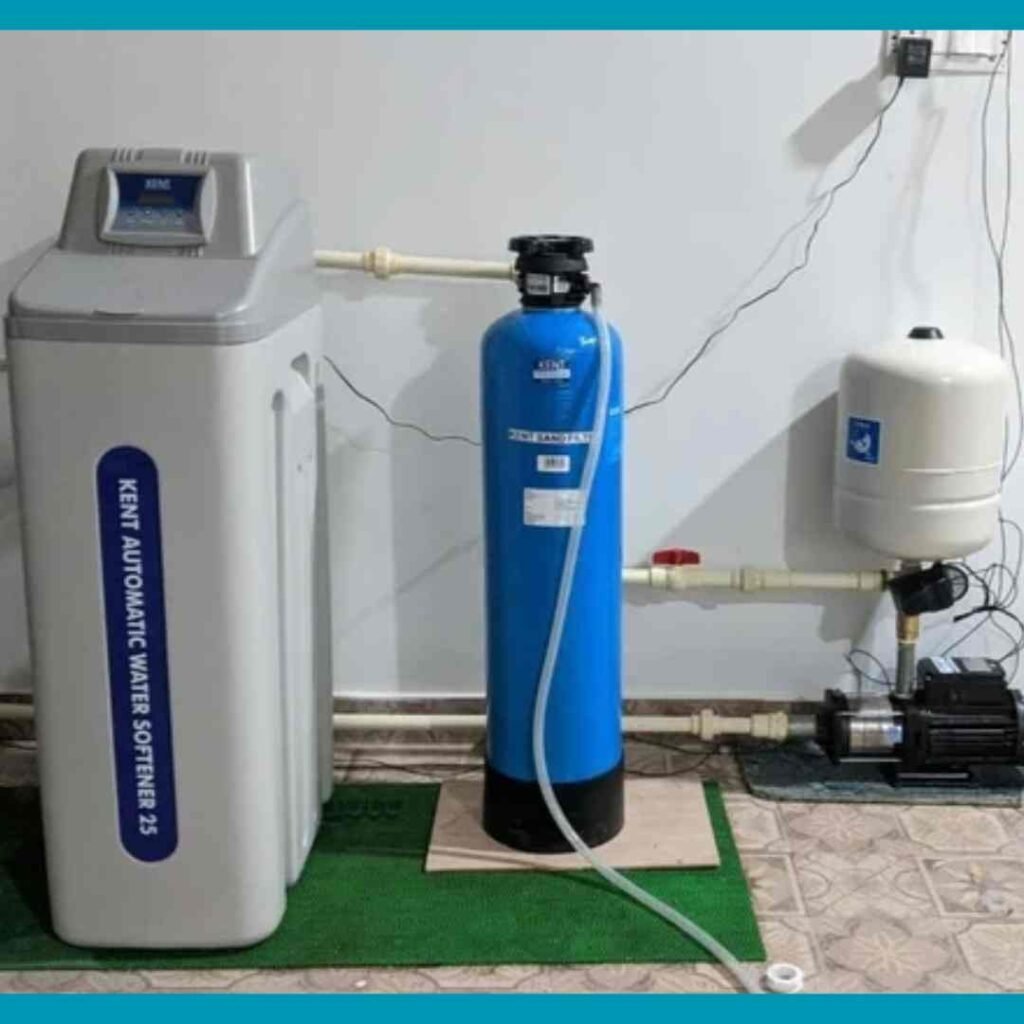
So, how do we fight back against this invisible enemy? The answer is a water softener. It’s a filtration system that’s installed at the main water inlet of your home, treating all the water before it even enters your pipes.
Here’s the simple magic behind it, with no complicated science.
Inside the water softener tank are thousands of tiny resin beads. These beads are coated with “soft” sodium ions. When hard water flows over these beads, a process called ion exchange happens. The resin beads act like magnets for the “hard” minerals. They grab the calcium and magnesium ions out of the water and, in exchange, release their own sodium ions.
The result? The water that flows out of the softener and into your home is now “soft,” free from the minerals that cause all the damage. It’s a simple, elegant, and incredibly effective solution.
Life with Soft Water: A World of Difference
Once a water softener is installed, the change is immediate and noticeable.
- Appliances Live Longer: Your geyser works efficiently, your washing machine runs smoothly, and your dishwasher cleans perfectly. You’re not just preventing future damage; you’re actively protecting your investments.
- No More Ugly Stains: Your taps, shower doors, and tiles stay shiny and clean with minimal effort.
- Luxurious Showers: You’ll notice an incredible difference in how soap and shampoo lather up. Your skin will feel smoother, and your hair will be softer and more manageable.
- Softer, Brighter Clothes: You’ll use up to 50% less detergent, and your clothes will come out of the wash feeling softer and looking brighter.
- You Save Money: Lower electricity bills from your efficient geyser, less spending on soaps and detergents, and avoiding costly appliance repairs all add up to significant savings over time.
Choosing the Right Water Softener: A Quick Guide
Not all softeners are created equal. When considering one for your Koramangala 3BHK or your Indiranagar villa, a professional will help you think about:
- Capacity: The size of the softener depends on your family’s size and daily water consumption. A bigger family needs a bigger unit.
- Regeneration: The resin beads eventually get saturated with hard minerals and need to be cleaned. This is called regeneration. Automatic softeners do this on their own based on a timer or water usage, making them completely hassle-free.
- Installation: A water softener must be installed correctly at the main inlet by a professional plumber to ensure it works effectively. This is not a DIY jugaad project.
An Investment, Not an Expense
It’s easy to look at a water softener as just another expense. But when you consider the cost of replacing a geyser every few years, the extra money spent on detergents, the damage to your plumbing, and the daily frustration, the perspective shifts.
A water softener is an investment in the health of your home and the comfort of your family. It’s a proactive step to protect your property from the ground up, literally from the water that flows through it.
So, the next time you’re scrubbing at a stubborn white stain on your tap, remember that it’s just the tip of the iceberg. The real damage is happening where you can’t see it. It’s time to stop fighting the symptoms and cure the problem at its source.
Tired of seeing your hard-earned money go down the drain because of hard water?
Don’t wait for your next appliance to break down. Our team at KKR Solutions can help you understand the severity of your hard water problem with a FREE water hardness test at your home.
Contact us today for a no-obligation consultation! We’ll analyze your water, assess your needs, and recommend the perfect water softener solution from trusted brands like Kent, complete with professional installation.
Share this article on your apartment’s WhatsApp group! You’ll be helping your neighbours protect their homes and probably answering a question they’ve been wondering about for years.